Merlin
01
A Letter to Shareholders from Matt George, Founder and CEO of Merlin Labs Fellow Shareholders:
Aviation has built our modern world while creating and enabling trillions in total economic value. For the past 100 years, aviation also has been built around pilots.
Its next 100 years will be built around autonomy.
We believe Merlin is winning the race to build that autonomous future, alongside customers and partners who are among the largest companies and institutions in the world.
We’re operating from a first-principles viewpoint: that is, if you founded a generational aerospace and defense company from scratch today — rather than inheriting a legacy business — you would not start just with metal and rivets. You would start with a brain: an intelligent system we call Merlin Pilot, which could fly any aircraft, anywhere, for any mission — and which would get smarter, faster and more capable with each flight.
That’s the business we’re building right now: an aerospace and defense technology company, working at the intersection of aviation and artificial intelligence. Our first-principles approach gives us a tremendous ability to innovate, move quickly and redefine what’s possible across aviation, aerospace and defense. Our goal is to develop full-stack autonomy for any and every aircraft — and to enable future aircraft to be designed and built around both AI and autonomous
capabilities.
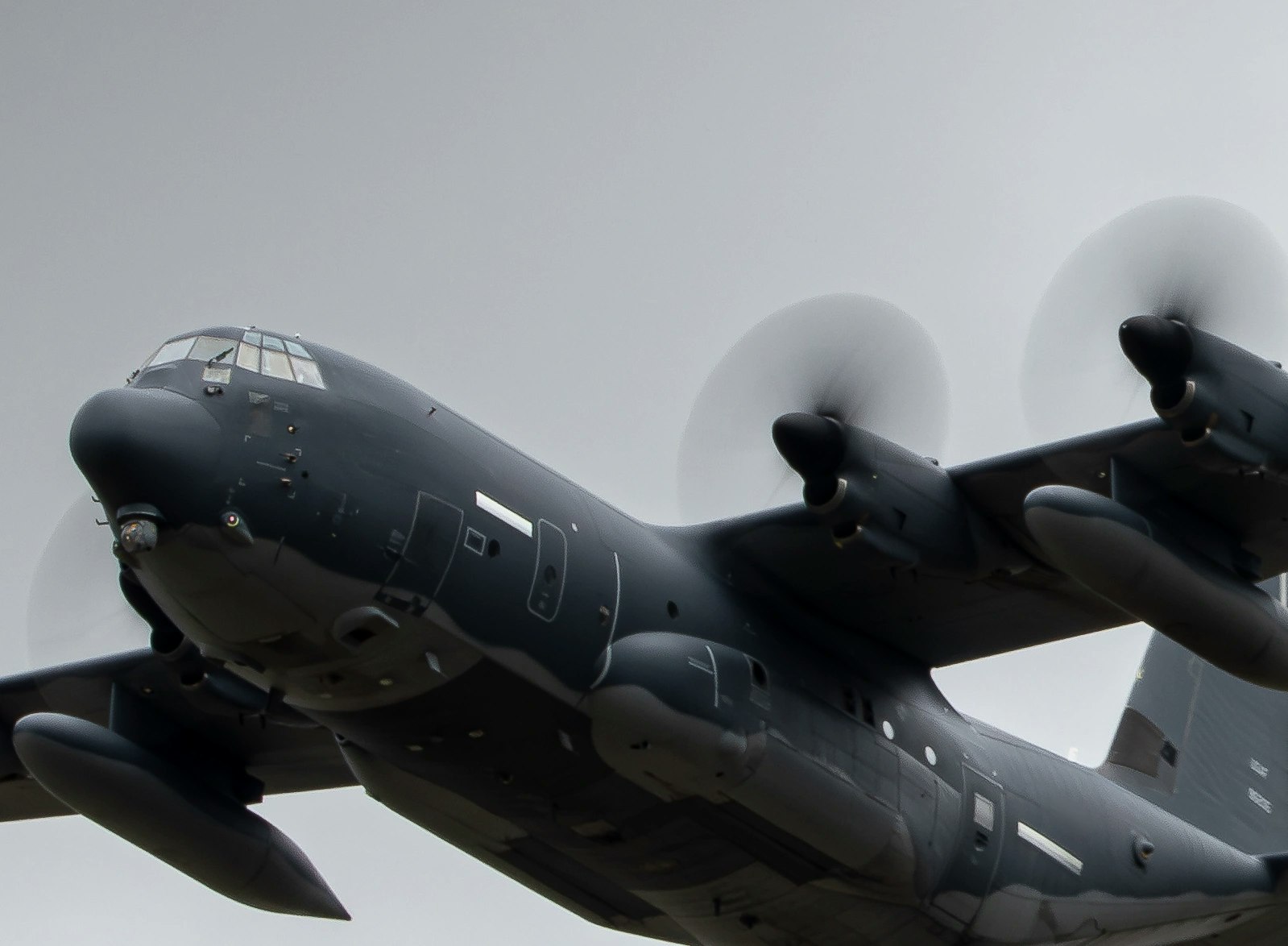
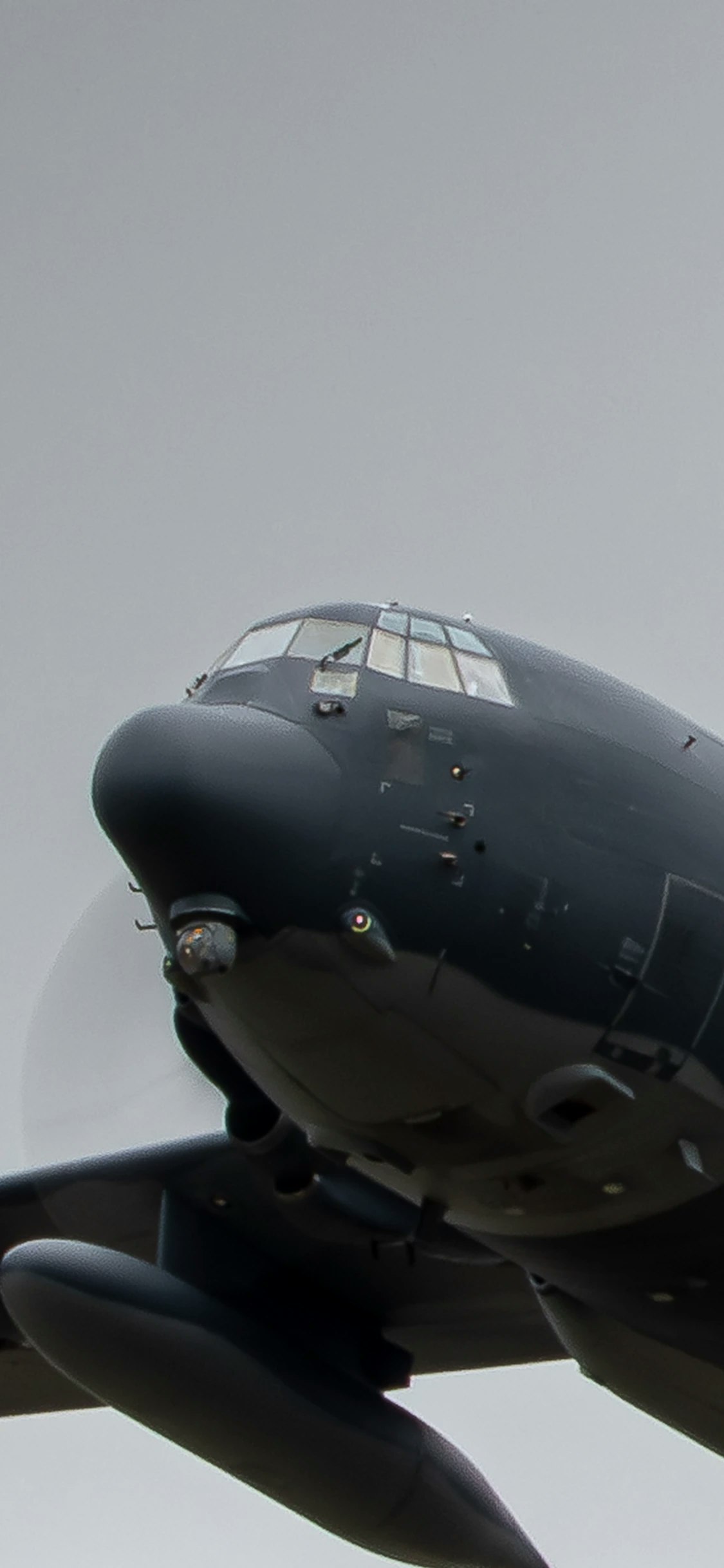
With our customers and partners, Merlin is realizing this vision methodically — achieving, to date, over $100 million in total contract value, primarily from being selected to bring autonomy to the C-130-J, the U.S. military’s prime tactical transport aircraft.
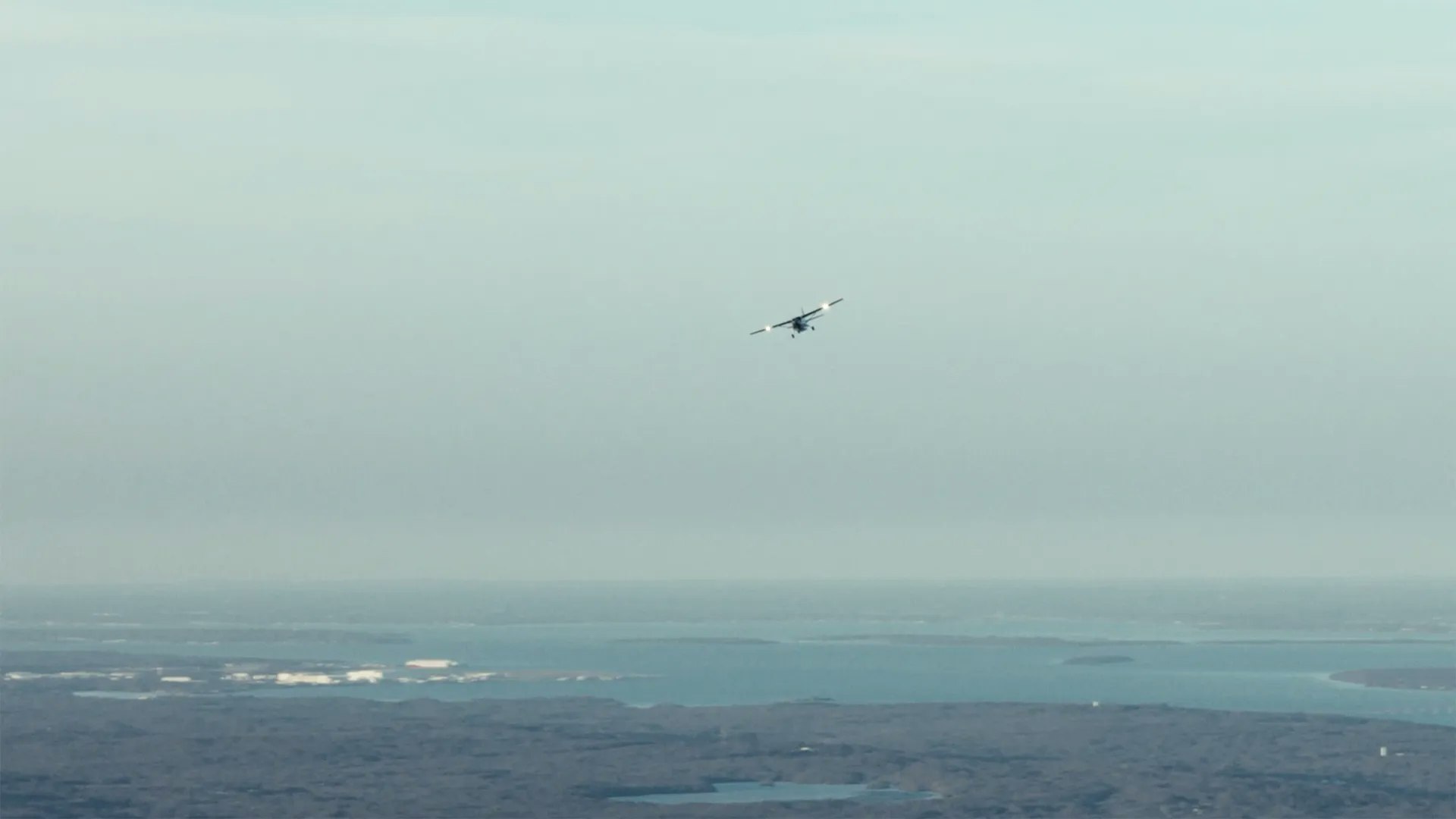
Beyond the C-130J program, Merlin also has integrated its autonomy technology into a wide array of aircraft, ranging in size from thousands of pounds to tens of thousands of pounds.
We also believe we will deliver the first civil certification of takeoff-to-touchdown autonomous flight incorporating machine-learning-enabled capabilities — establishing a path to a true standard for certified autonomy in commercial aviation.
We believe that whoever builds the operating system of record for the sky will become the next generational aerospace & defense company. We also believe that based on our progress to date, we have a commanding lead in this space, both from technical and from certification/commercialization perspectives.
Why This Matters
American aerospace was one of the primary engines of this nation’s economic scale and global power. From the Berlin Airlift, to the SR-71, to the cargo networks that connected a continent —
US leadership in this sector was built deliberately, through sustained investment and a willingness to define new categories rather than just optimizing old ones.
However, the leadership and innovation mindset that made American aerospace great can be lost. The companies that built American aerospace became among the most influential of our time. But more recently, many have stagnated — leaving innovation behind and acting mostly as integrators, optimizers and managers of sustainment contracts. Their business models are built around sheet metal, not software, data and information that also works seamlessly with hardware and manufacturing. In fairness, the incentives that drive them today favor extending legacy programs over inventing new categories.
Meanwhile, peer nations are investing aggressively in autonomous aviation. They understand what Merlin understands: whoever masters the autonomous sky will define the next century of flight — military and civilian. Those nations are not waiting, and so neither are we.
Rethinking What Flight Can Be
Aviation up to now was defined by the humans who fly aircraft — and so aviation design, engineering and operations reflected a human focus, including cockpits, controls, routes, and duty rosters.
Merlin was founded on the insight that, when you challenge that core human-centricity and all its related assumptions — when aircraft can fly themselves — the nature and possibilities of aviation change. We believe those shifts create a massive economic and industrial opportunity:
- Aircraft/airframe design changes. Cockpits exist to keep humans alive and in control at altitude. Remove that requirement, and aircraft can be optimized purely for a given mission — cargo capacity, range, efficiency, cost. Airframes become simpler. New form factors become possible. Aircraft that were never economical to build in the past become viable.
- The economics of flight change. Cargo networks today are constrained by crew availability, duty-time regulations, and the cost of stationing pilots where aircraft need to be. Autonomous aircraft can fly when the mission demands. They can reposition without labor cost. They can operate from locations where basing human crews would be impractical.
- The missions we can fly change. Aerial firefighting, contested military logistics, medical evacuation, disaster response, remote cargo delivery — these are constrained today by pilot availability and the limits of what we can ask humans to risk. Autonomous systems can fly where and when human crews cannot.
- The role of humans changes. Autonomy shifts expertise from hand-flying aircraft to supervising fleets, planning missions, and handling exceptions. Instead of two pilots per aircraft, one operator can oversee many.
- Data as well as related network effects will become an absolutely critical asset. Every autonomous flight generates information — sensor data, weather encounters, system performance, route optimization.
An intelligent system that flies thousands of aircraft learns from all of them.Each time it flies a new aircraft, encounters a new environment, or accomplishes a new mission, Merlin Pilot gets smarter. This is how software platforms work. We are bringing that model to aerospace.
What We Are Building
We are building Merlin Pilot using a methodical “crawl-walk-run” approach that focuses on creating incremental wins, in order to change the entire future of how humans use the sky. We are working with our customers and partners to identify all the ways that assured autonomy can solve real problems, in the real world, and meaningfully improve mission execution and outcomes. By doing this methodically, we are building deep experience moats and network effects across our customer base, leading to defensible long term value.
We are deliberately designing Merlin Pilot to enable swift and cost-effective integration onto multiple platforms, without compromising safety. We choose to advance our technology and add to its capabilities in ways that are scalable and adaptable, while maintaining and protecting its certifiable core.
We hope our investors will appreciate and understand this approach to innovating and building for the long term. Equity markets often focus on the short term — vs. rewarding step-by-step progress towards long-term value. This hope is why I have written this letter.
I want investors to have 100% transparency into the terms on which we view our own business and our potential — because these terms are different from what has come before. We would ask that, given this difference, we are judged on what we do and how we perform in this new context, not in legacy aerospace and defense terms.
Specifically, it is important for investors to recognize that Merlin Pilot is an autonomous flight system designed from first principles for the purpose of flying any aircraft — military or civilian — from takeoff to touchdown, with or without a human crew on board.
It perceives its environment through an array of sensors. It processes information through algorithms that combine high-assurance flight control with AI. It communicates with air traffic control using natural language. It makes decisions. And it is being built to meet the certification standards that have made commercial aviation the safest form of transportation in history.
This architecture matters. Our system features a deterministic, rule-based core that operates independently of AI, ensuring predictable and explainable behavior even in edge cases.
Autonomy without certification is a science project — but with certification it’s a scalable, defensible and unique business. We are building for certification from day one.
We want to underscore for investors our technology’s multi-aircraft capability and the commercialization advantages it potentially offers. Designed and built right, the same “brain” that flies a C-130J can fly a cargo turboprop, a tanker, a surveillance aircraft, or a commercial freighter.
This means that, for Merlin Pilot, each new aircraft type requires adaptation, not reinvention. It also means that every aircraft we equip will generate data that makes the system smarter. Every flight expands our training set. The more we fly, the more valuable the software becomes — and the harder it becomes for anyone else to replicate what we have built.
For shareholders, this means that the market we are pursuing is not just the current aviation fleet. The potential addressable market for certified autonomous aviation grows as the constraints of pilot-centric design fall away. This market is potentially every aircraft that could fly if the old constraints were removed, and it also is new aircraft that have not yet been developed, and that we believe can only be built with our input and help.
We believe whoever certifies and has first-mover advantage with the operating system for autonomous flight will be positioned at the center of this transformation. Airlines, cargo operators, defense ministries, and new entrants: all of them will need certified autonomy to participate in what comes next. We intend to be the company that provides that capability.
Proving It, Where It Matters
Technology claims are easy, especially these days. Making the technology real — not just taking it out of the lab, but earning customer trust and showing that you can repeatably commercialize your tech — that’s proof. Aerospace and defense use cases in particular demand the highest and hardest standards of proof.
These standards underscore the importance of Merlin’s position as the sole prime contractor for U.S. Special Operations Command’s program to bring autonomy to the C-130J. This is a production-focused program with defined milestones and a path to fleet-wide deployment. We are among the first to be engaged by the U.S. military to demonstrate airworthiness of AI-enabled autonomy on a military aircraft of this scale.
Beyond this program, Merlin’s teams have logged thousands of hours of autonomous flight across multiple civil aircraft types, and have partnerships with Northrop Grumman and GE Aerospace that we believe help position us to pursue autonomous flight programs at scale across a broad range of commercial aircraft use cases.
As importantly, we are engaging with both the FAA and New Zealand’s Civil Aviation Authority on certification pathways and are advancing civilian cargo work in New Zealand that demonstrates additional commercial applicability.
Top-Line Implications of Our Long-Term Focus
Our current IDIQ (indefinite delivery indefinite quantity) contract with USSOCOM includes a current ceiling value of up to $105 million over five years. Revenue is recognized as and when task orders are funded and work is performed under applicable accounting standards. Our current financials reflect the early stages of this program; we believe they do not yet reflect the full potential of what we have been contracted to pursue.
In addition to this major contract, of course, Merlin continues to work on many other fronts across multiple use cases and sectors within aviation, aerospace and defense.
We are building fundamental technology in a regulated industry where timelines are measured in years. Our near-term revenue comes from defense contracts. We believe our long-term opportunity is the market that emerges when aviation sheds the constraints of the past hundred years.
The Future That We Believe Is Inevitable
The future of flight is autonomous — because autonomy replaces legacy constraints with possibilities, and those possibilities are both within reach, and incredibly valuable across populations, industry sectors and governments worldwide. Merlin is built from the ground up to anticipate these possibilities, and to pioneer this autonomous future’s certified, regulated, replicable commercial solutions.
Our team has spent years preparing for this moment. We believe we have assembled one of the strongest engineering organizations in autonomous systems. We have won the trust of the most discerning customer in aviation: the United States military.
We are building the technology that works, the partnerships that matter, and a plan to scale. Now we are asking you to join us.
This is not about next quarter’s numbers. This is about building the operating system of record to power the next 100 years of flight.
It is also a commitment to help America lead the autonomous aviation age the same way that we led the age that came before — not by protecting the past, but by inventing the future.
We are that team. We invite you to build with us.
Sincerely,
Matt George
Founder and Chief Executive Officer
Merlin Labs