Certification as a Roadmap, Not a Roadblock: Meet Josh Burford
UpdateOctober 07, 2026


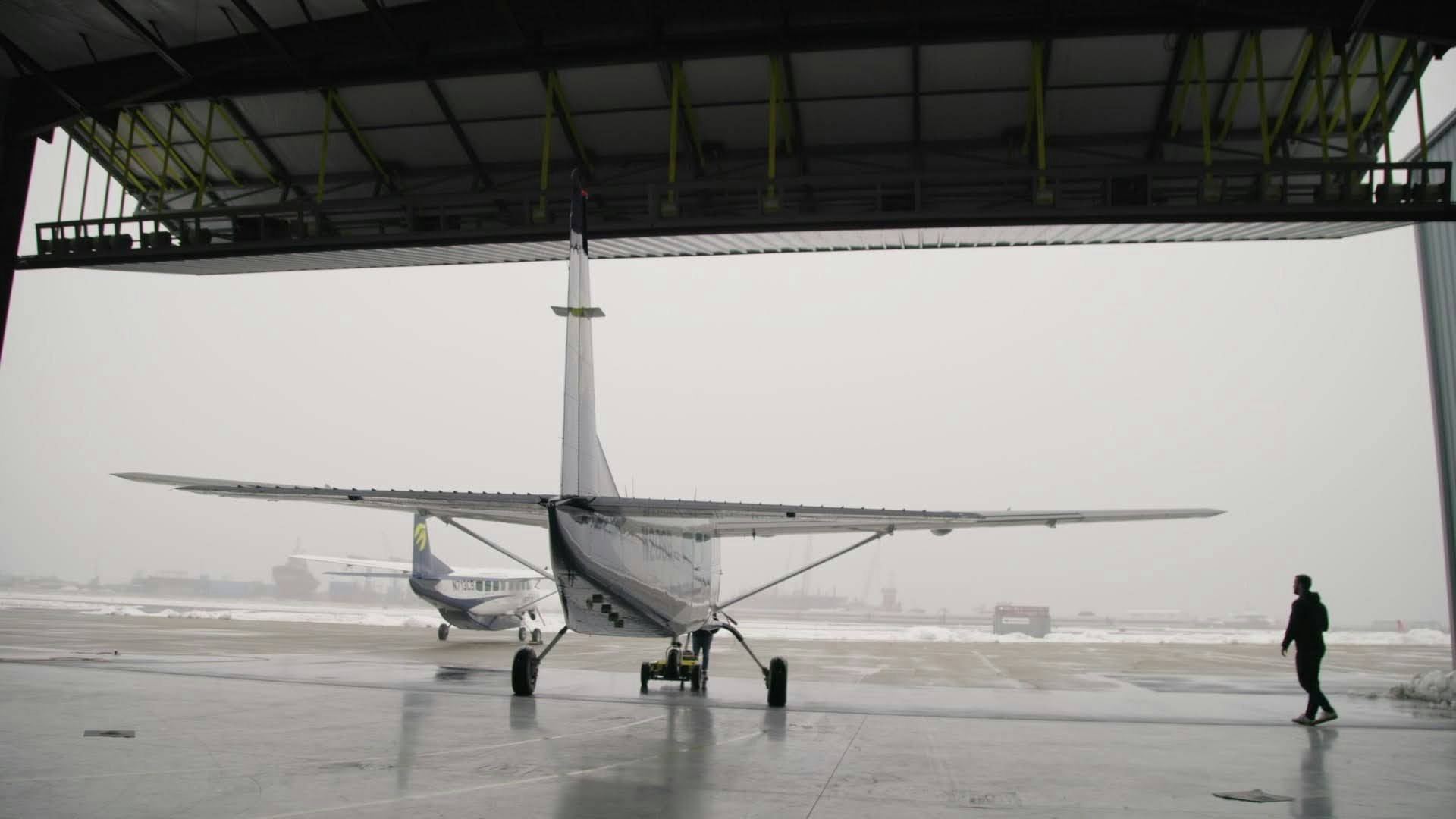
A Former Military Pilot Explains Why Earning Regulators' Trust Matters More Than Checking Boxes
Josh Burford leads the team responsible for getting the Merlin Pilot in front of regulators, from civil certification work on the Caravan to military airworthiness approval on the C-130J. He talks about what it takes to build trust with regulators long before a program reaches its finish line, how his own background as a military pilot shapes his thinking on workload and situational awareness, and the certification lessons he's carried over from years leading avionics and electrical work on Gulfstream programs.


What brought you to Merlin, and what drew you to autonomy in aviation?
I spent 15 years at Gulfstream Aerospace, a well-established aircraft manufacturer, and while I valued that experience, I wanted to be part of a team pushing technology forward, at a scale where you can move quickly and see the direct impact of your work. That’s also what I missed most from my time in the military: being part of a small, focused, fast-moving team where everyone understands the mission and can adapt quickly. Merlin gave me the chance to bring that same energy to one of aviation’s hardest problems, building a pilot for multiple aircraft types, just not a human one.
Tell us about your role as Vice President of Airworthiness and Certification.
I lead the team that provides applicant support for programs pursuing civil certification, such as the Caravan, and military airworthiness approval, such as the C-130J. In addition to supporting these programs, we’re focused on creating and refining the processes that can support the certification of advanced technologies and build confidence in them.
Internally, we educate our design and flight-test teams about compliance requirements early so that certification is considered from day one rather than addressed later in development. Externally, we represent Merlin in its engagement with regulatory authorities and work to earn their trust.
In your view, what makes Merlin’s approach to autonomy meaningful in the broader aviation ecosystem?
What sets Merlin apart is the range of backgrounds represented across our teams and leadership, from automotive and military special operations to general aviation and large aircraft manufacturing, along with no shortage of general aviation enthusiasts and pilots. That diversity informs each iteration of the Merlin Pilot, allowing technology and lessons to cross-pollinate and inform one another.
We’re not approaching autonomy as a capability intended for one aircraft or mission. We’re building knowledge and experience that can be applied across aircraft types while supporting the continued development and refinement for each deployment.
How does working on real-world aircraft and flight-test programs influence your perspective on autonomy?
As a former military pilot, I’ve experienced the challenges this technology is intended to help address for the warfighter, particularly when missions don’t go as planned. That experience shapes how I think about autonomy, it’s about developing tools to support situational awareness, help manage workload, and preserve capacity so crews can remain focused on the mission.
I see similar potential for general aviation and commercial operators. The mission may be different, but the need is much the same, technology that can support the crew when conditions don’t go as briefed.
What are you most excited about for your next chapter at Merlin?
What sold me on Merlin was the enthusiasm of the people pushing the boundaries of this technology. Tim Burns, Merlin’s CTO, has done an incredible job helping to bring in leaders who are supercharging what this team has already accomplished, making our processes clear, accessible, and aligned with the rigor that certification demands. That’s what I’m most excited about: being part of a team that keeps raising its own bar.
You led avionics and electrical certification across multiple new Gulfstream programs. What does it take to carry new technology across the certification finish line?
It comes down to trust, trust in our people, trust in our processes, and trust with regulators. Certification requires a team fully dedicated to this idea, it can’t be something bolted on at the end of a program. At Merlin, we can help shape these processes ourselves, establishing ones that help our teams work consistently and efficiently while maintaining the discipline that certification requires.
Certification is sometimes dismissed as red tape. Why does it matter for bringing new technology into the sky?
Certification isn’t easy, and it can feel like a lot of red tape when it hasn’t been considered from the start of a program. But, when it’s part of the culture, it becomes a roadmap, not a roadblock. Every system we build must earn the confidence of regulators before it can earn the confidence of operators and passengers. As Deming put it, “A bad system will beat a good person every time.”
Cautionary Statement Regarding Forward-Looking Statements
The views expressed in this post reflect the personal perspectives of Josh Burford, Merlin's Vice President of Airworthiness and Certification, and contain forward-looking statements within the meaning of the Private Securities Litigation Reform Act of 1995; actual results may differ materially from those anticipated, and readers are cautioned not to place undue reliance on such statements, which speak only as of the date of this post and are subject to the risks and uncertainties described under "Risk Factors" in our filings with the Securities and Exchange Commission, including our Prospectus dated May 13, 2026, filed with the SEC on May 13, 2026, and our subsequently filed Quarterly Reports on Form 10-Q, which are available from the SEC. Except as required by applicable law, we undertake no obligation to update any of these forward-looking statements after the date of this post.
Related


Oshkosh: The Story Behind One of the World's Greatest Aviation Celebrations
Update
Jul 10, 2026

Merlin Signs Agreement with Northrop Grumman Corporate to Advance Next-Generation Autonomous Flight
Press Release
Jul 30, 2025


A Visit From Palau: President Whipps on Patrolling a Maritime Domain the Size of Texas
Update
Oct 14, 2026