Hands Off the Controls: What a CNN Flight Revealed About Safety and AI-Powered Autonomy
UpdatesJune 12, 2026


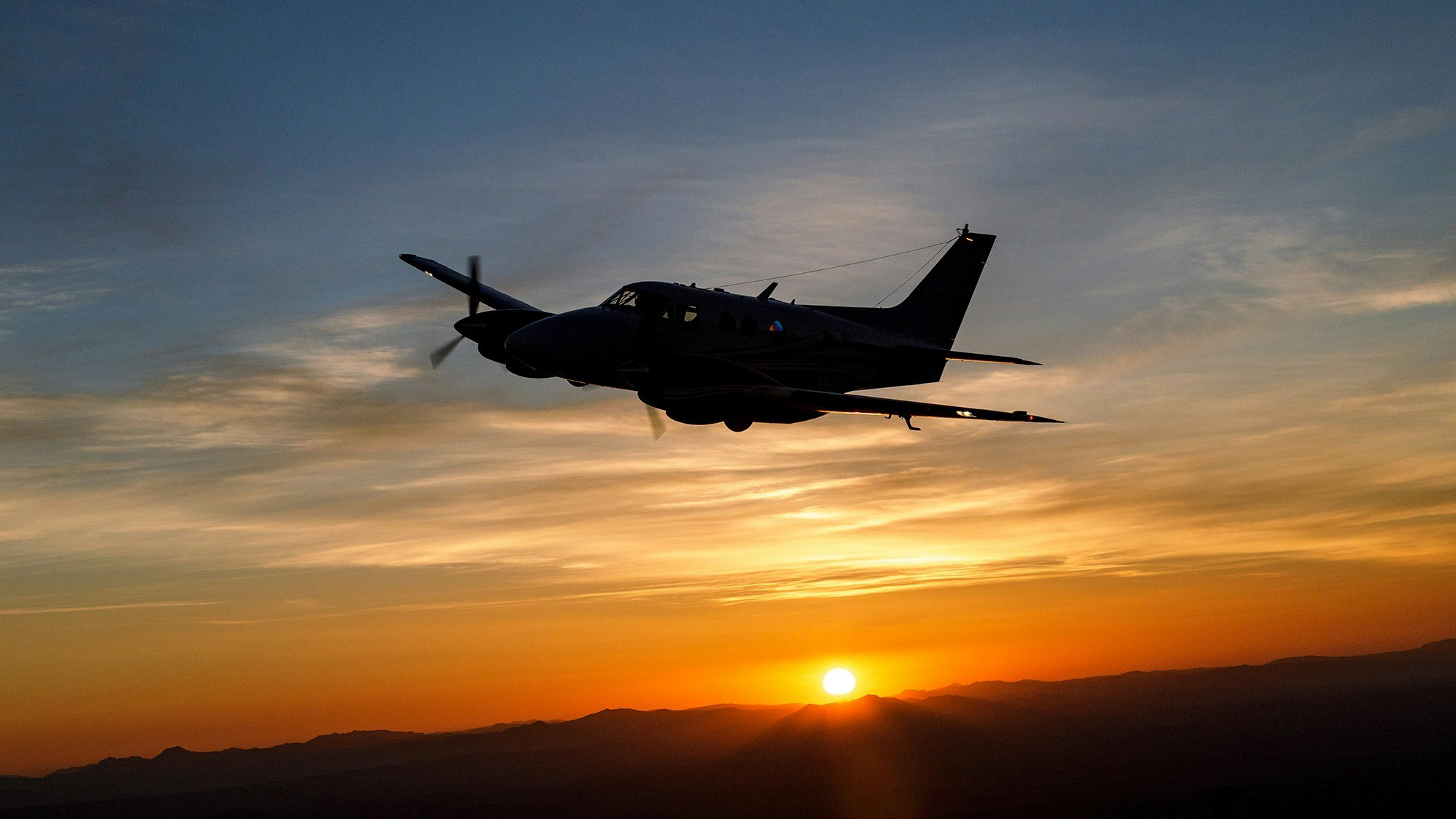
Recently, we had the pleasure of hosting CNN's Pete Muntean at our flight operations facility in Quonset, Rhode Island, where he climbed into the cockpit and flew with us to see the Merlin Pilot in action.
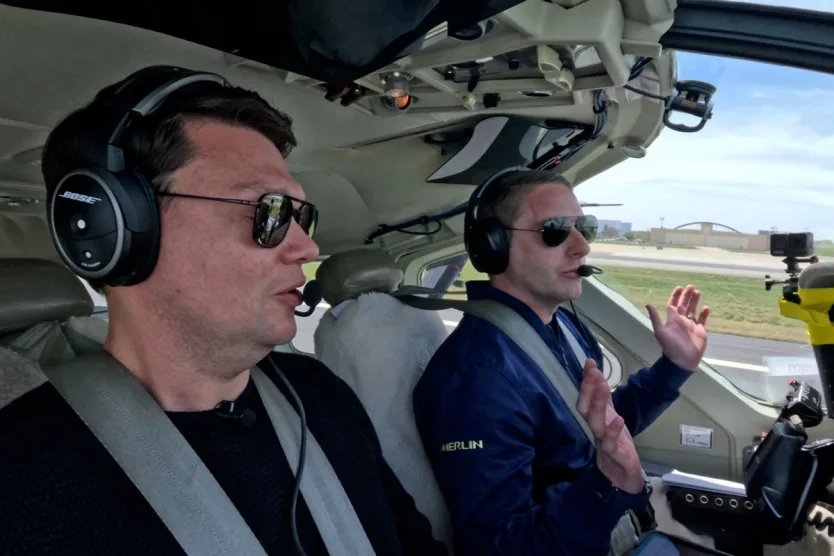
With Pete in the seat beside our safety pilot, the autonomous flight system took over: hands off the controls, "jazz hands" in full view. From his front-row view, Pete watched it execute a fully automated takeoff, take natural language commands in coordination with the Quonset tower, fly the route, and bring the aircraft back down to an automated landing.
The segment that followed put a national spotlight on the question: how can autonomy make flying safer?


A skeptic in the cockpit
Pete is a pilot himself, and by his own admission a bit of a “control freak.”
Taking his hands off the yoke and trusting a computer, he said, did not come naturally. We understand and appreciate that, because it is the same instinct that has kept aviation safe for a century.
What makes the flight worth noting is what Pete took away from the experience. He described the demonstration as an important one, part of a real evolution in how aircraft will be flown. He also laid out the pressures driving that evolution: a growing global pilot shortage, an air traffic control system under strain, and a recent run of high-profile close calls and accidents. Those are the stakes. It is why our work matters, and why we believe autonomy that supports the people in the cockpit is not a novelty but a safety imperative.
How trust is built
How is trust built? Not all at once, and not by asking for it. Merlin Pilot is an autonomous flight system being designed from first principles to fly any aircraft, military or civilian, from takeoff to touchdown, with or without a human crew on board.
If you ask people today whether they would board an aircraft with no pilot, we believe most would say no, and that is completely rational. In an industry where regulatory requirements and user acceptance are critical, changes of this magnitude don't happen overnight. New systems need to build trust incrementally. Technology advancements like autopilot and fly-by-wire were all questioned initially. Today they are standard.
Merlin is taking the same incremental approach to autonomous aviation. We are starting with Merlin Pilot as a safety-enhancing system alongside the pilot, with the goal of taking on workload, improving consistency, and acting as a constant cross-check. Over time, as the system proves itself in real operations, we believe the industry can move toward reduced crew operations.
Earning trust through performance
The principle at the center of our work is simple. We don’t think it is reasonable to trust autonomy because we tell you to. Trust will be earned when a system performs, consistently and transparently, over thousands of flights. Our job is not to sell the idea but to build a system that earns trust through discipline, data, and real-world performance.
Where this goes next
For the past 100 years, aviation has been built around pilots. Its next 100 years will be built around autonomy.
That future is not abstract. It looks like a pilot - many of whom will admit they like to be in control - taking their hands off the yoke and watching the aircraft fly the route and land safely on its own.
We were glad to show Pete this firsthand, and we look forward to proving it over many flights to come.