One Seat at a Time
UpdatesSeptember 30, 2026


Crew Reduction Use Cases Are the First Commercial Stop on the Road to Full Aviation Autonomy
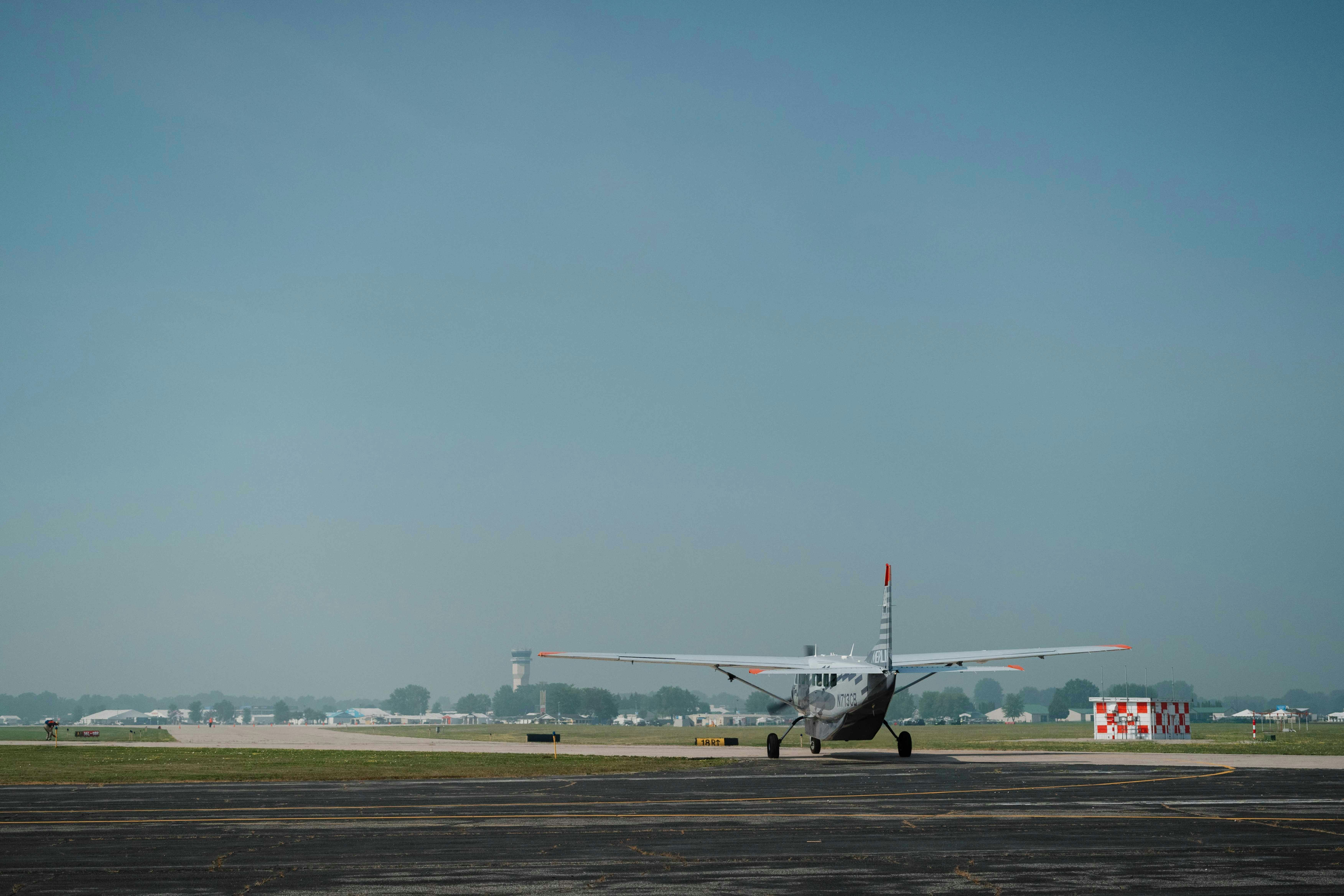
Say “autonomous flight” and most people picture a cockpit with no pilots, or a drone. Merlin’s mission remains focused on building the operating system of record for the next century of flight - and so we believe that will ultimately mean providing full autonomy in both civil and defense sectors of aviation. However, the flight-path to that end state passes through an important commercial space where pilots remain present, but software still improves both flight and fleet economics.
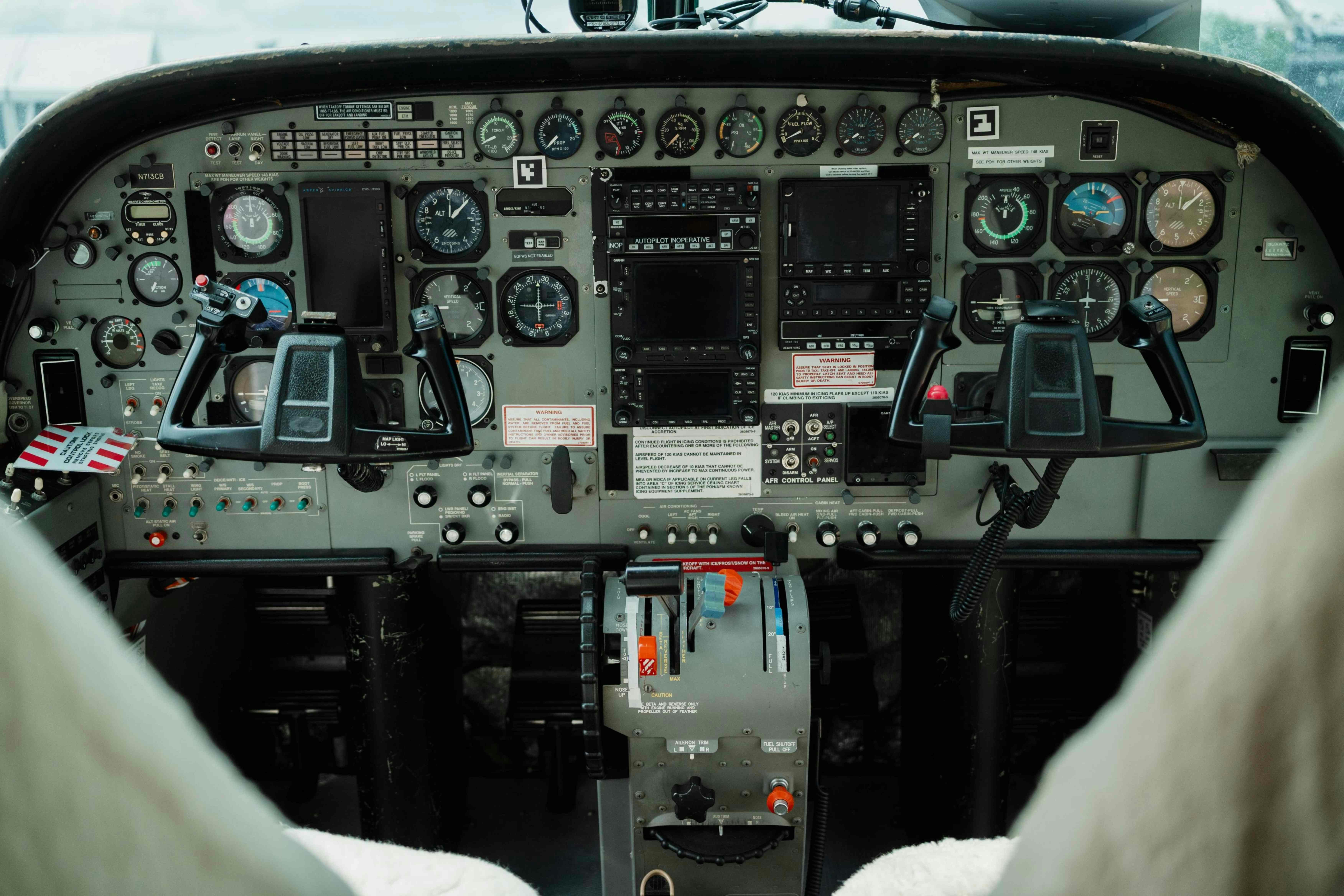
On our second quarter call in August we described the Merlin Pilot as aimed at larger fixed-wing aircraft, crewed as well as uncrewed, and starting with the airplanes already flying today. (1) The crewed part of that callout matters commercially, because a “crewed autonomy” use case is less of a leap for Merlin, the industry, and regulators than an empty flight deck. That’s one reason that, in May, we introduced Condor and its reduced crew and augmented operations opportunity. (2)
The Impact of Crew Composition Limits
Crew composition already determines how long an aircraft can fly, which is easy to miss unless you have built an airline roster. Under the FAA flight and duty rules governing passenger operations at Part 121 carriers, an unaugmented two-pilot crew is capped at nine hours of flight time in a duty period. Adding a third pilot with a certified onboard rest seat lifts that ceiling to thirteen, and a better class of rest facility carries it to seventeen. (3)
The airframe and the route are unchanged across all those scenarios. The key commercial variables are who is on board, the available hours and the related cost - with the output being how long it takes to actually complete the route.
Filling those seats is expensive, and on the same Q2 call we cited third-party estimates of the annual bill at more than $45 billion in the United States alone, split between over $22 billion for military fixed-wing pilots and more than $24 billion for US commercial pilots. Across the fleets involved, that comes to roughly $3.3 million per aircraft per year on the military side and about $3.2 million on the civil side. (4) That’s the kind of recurring cost that calls out for improvement via software.
Leaving economics aside for the moment, we’ve also pointed out that pilot supply is not keeping pace with demand. The National Air Carrier Association projects a cumulative shortfall of more than 28,000 pilots in the United States by 2030, driven largely by retirements at the mandatory age of 65. (5) Anyone who has stood at a gate while a flight was cancelled because the crew ran out of legal duty hours has met that arithmetic already, and it turns up in freight too, in the extra day a package waits somewhere an operator cannot justify basing a second pilot.
For Merlin, crew reduction and full autonomy come out of one engineering program, since everything is being built on a single core, and the commercial model repeats on every airframe: our business model expects that we’ll adapt the Merlin Pilot to an aircraft, integrate it, then collect a recurring license fee for the life of the software. (6) This year we completed Critical Design Review on the USSOCOM C-130J program and reached Stage of Involvement 3 with the Civil Aviation Authority of New Zealand under its bilateral safety agreement with the FAA, having verified the flight control computer and automated communication system software against their requirements. (7)
The addressable footprint we described in August runs past 29,000 aircraft once military fixed-wing inventory, civil cargo and passenger fleets are combined, and all of them carry a crew today. (8) We believe the sensible way into a base that size is to enable the crew already on board more productive, letting certification evidence and flight hours accumulate while the regulatory ground for uncrewed operations is still being laid.
We believe a world with autonomous aircraft will be a safer and more efficient one - and expect to see some of those benefits ahead of full aviation autonomy, by helping existing crews and fleets do more, more safely, without being limited by, e.g., pilot shortages. That’s something to think about the next time you’re stranded at a gate due to crew constraints.
Sources
Merlin, Inc. second quarter 2026 earnings call, August 13, 2026. Full transcript at benzinga.com/news/26/08/61197503/full-transcript-merlin-q2-2026-earnings-call. Webcast at investors.merlinlabs.com.
Merlin, Inc. first quarter 2026 earnings call, May 13, 2026, introducing Condor and the single pilot and augmented operations opportunity for large aircraft.
14 CFR Part 117, Flight and Duty Limitations and Rest Requirements: Flightcrew Members, ecfr.gov/current/title-14/chapter-I/subchapter-G/part-117. Part 117 governs passenger operations conducted by Part 121 certificate holders; all-cargo operations remain under Part 121 subparts Q, R and S unless the certificate holder elects to apply Part 117.
Merlin, Inc. second quarter 2026 earnings call, August 13, 2026. Sourcing for the industry and market statistics cited on that call is set out in the appendix to the accompanying investor presentation at investors.merlinlabs.com.
National Air Carrier Association estimates, as reported in AOPA, "Airline pilot hiring shows renewed momentum," January 28, 2026, and AeroTime, "Airline pilot hiring outlook improves for 2026," January 23, 2026. ATP Flight School cites the NACA figure as a cumulative shortage of 28,126 pilots by 2030.
Merlin, Inc. second quarter 2026 earnings call, August 13, 2026, CFO remarks on the adaptation, integration and licensing phases.
Merlin, Inc., "Merlin, Inc. Reports Second Quarter 2026 Financial Results," August 13, 2026. Completion of Critical Design Review on the C-130J autonomy program was announced June 4, 2026; Stage of Involvement 3 with the Civil Aviation Authority of New Zealand was announced August 6, 2026.
Merlin, Inc. second quarter 2026 earnings call, August 13, 2026. Components of the operating base as described on that call: more than 6,750 US defense fixed-wing aircraft excluding China and Russia, approximately 2,400 global civil cargo aircraft, and more than 20,000 global passenger aircraft.
Cautionary Statement Regarding Forward-Looking Statements
This post contains forward-looking statements within the meaning of the Private Securities Litigation Reform Act of 1995. Forward-looking statements can be identified by words such as “anticipate,” “believe,” “estimate,” “expect,” “forecast,” “intend,” “may,” “plan,” “potential,” “project,” “target,” “will,” and similar terms. All statements other than statements of historical fact should be considered forward-looking statements, including without limitation statements regarding: the anticipated adoption of full autonomy across the civil and defense sectors of aviation and the belief that reduced-crew and augmented-operations use cases represent a commercial path to full autonomy; the anticipated commercial launch of Condor and its reduced-crew and augmented-operations capabilities; and the anticipated progress, timing, and outcomes of Merlin’s C-130J autonomy program with U.S. Special Operations Command. These forward-looking statements are based on our current expectations, assumptions, and projections about future events and trends. These forward-looking statements are neither promises nor guarantees, but involve known and unknown risks and uncertainties that could cause actual results to differ materially from those expressed or implied by the forward-looking statements, including without limitation the risks and uncertainties detailed under the section entitled “Risk Factors” of our final prospectus, dated May 13, 2026, filed with the SEC on May 13, 2026, and in our Quarterly Reports on Form 10-Q. This post also contains estimates and other information regarding our industry and market, including third-party estimates of pilot staffing costs, pilot supply and demand, and the size of our addressable market, which are based on management estimates derived in part from the third-party sources identified in the footnotes above, as well as our internal research. While we believe this information is generally reliable, it is inherently uncertain and imprecise. Except as required by applicable law, we undertake no obligation to update any of these forward-looking statements after the date of this post.