The Beechcraft King Air: Giving a Longstanding Workhorse a New Kind of Judgment
UpdateNovember 18, 2026


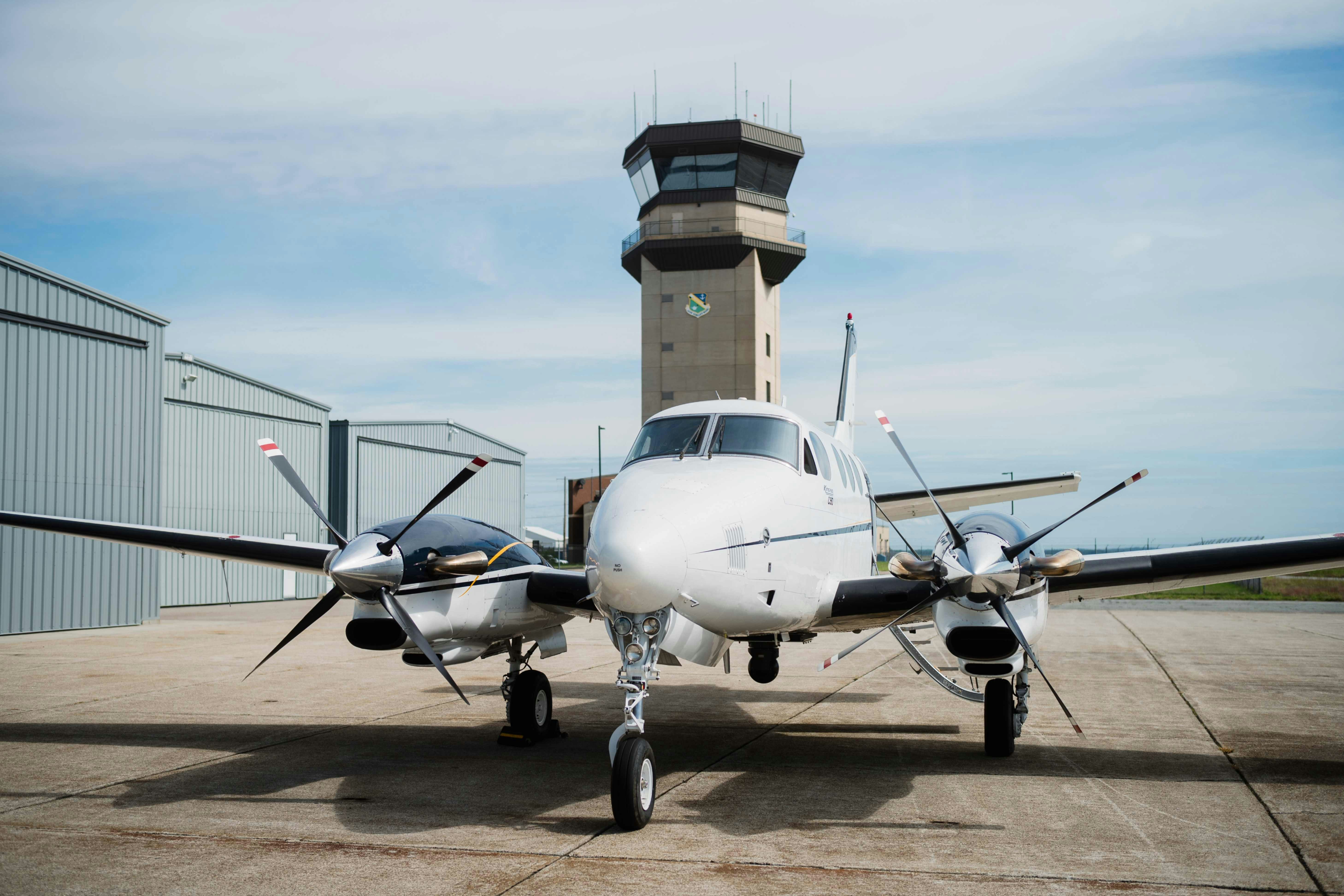
Why One of Aviation’s Most Familiar Airframes Is Now Being Flown by the Latest Version of Merlin Pilot
Merlin recently completed the first flight of the next generation of Merlin Pilot aboard a Beechcraft King Air C90. A workhorse of the global intelligence, surveillance, and reconnaissance (ISR) fleet, this is the first autonomous flight of a King Air C90 to Merlin’s knowledge. The software version on board represents a significant upgrade in functionality, designed to fly aircraft autonomously and use sensors to make mission choices. Maritime search and patrol are among the missions this capability is being developed to support.
The King Air is one of several aircraft deliberately chosen to develop and test how the Merlin Pilot can adapt across different operational needs: the Caravan for shorter utility missions and Merlin’s C-130J work (run through U.S. Special Operations Command (USSOCOM), on aircraft outside Merlin’s owned fleet) for higher-payload tactical airlift. The King Air fills the space between them with ISR and maritime missions that call for twin-engine endurance.
Aircraft at a Glance
Manufacturer/model: Beechcraft King Air C90
Configuration: Twin-turboprop
Typical missions: Transport (passenger and cargo), survey and science, medical evacuation (medevac) and air ambulance, military cargo and contested logistics, and ISR
Role at Merlin: Current fleet; flight testing and development
Aircraft Registrations: N122K
Why Six Decades of History Still Matters
The King Air family has served commercial, government, and military operations for more than six decades. By July 2024, Textron Aviation had delivered more than 7,800 King Air family aircraft and logged 64 million flight hours worldwide. Across its variants, the family supports passenger and cargo transport, medical flights, survey work, surveillance operations and military cargo resupply in contested logistics environments. That operating history matters when selecting an aircraft for autonomy development. Operators already understand the King Air, and its widespread use supports an established base of maintenance experience, parts, and training. It also reaches places other aircraft can’t. Modest runway requirements let it operate from remote strips with limited infrastructure, the kind of access that matters for missions in austere or underdeveloped locations.
ISR is a natural focus for the King Air. Long periods on station place sustained demands on crews, while the mission depends on collecting and interpreting information. Maritime search and patrol bring those requirements together: maintaining controlled flight while using sensor information to determine how to carry out the mission.
Establishing the Foundation for Integration
One of the team’s earliest challenges was establishing exactly how the aircraft’s avionics operated. As with most pre-owned aircraft, previous modifications had been made to the King Air over the years.
“Documentation gives you a starting point, but you still have to measure and test what is actually installed. On the King Air, that work confirmed the inputs and outputs needed for integration and gave the team evidence to resolve assumptions before flight.”
Patrick Van Wie, Director of Aircraft Engineering, Merlin
Extensive ground testing followed, checking those assumptions against how the aircraft actually behaved and confirming the aircraft and Merlin’s systems worked together as expected. Before test flights, Merlin conducts a formal review sequence (Test Readiness Reviews, Flight Readiness Reviews, and Safety of Flight Evaluations) that surfaces assumptions and technical challenges. Each review has to show evidence that issues have been addressed before it locks in the aircraft configuration for the next flight campaign. Merlin has implemented standard operating procedures for detailed surveys of aircraft, gathering the information needed to characterize the existing systems before integration.
Its twin-turboprop configuration requires coordination across throttle, propeller, and power management, including accounting for differences in engine response and the effects of asymmetric thrust. Existing instruments, navigation equipment, and communications systems must interface with Merlin Pilot, while control integration must accommodate the aircraft’s flight-control response. The installation also has to work within the aircraft’s physical constraints. Avionics and sensors require space and maintenance access, with careful attention to weight and balance, available payload, and installation standards.
Beyond the First Flight
The first flight began a strategic campaign to test the capabilities of the software aboard the King Air. We believe this version of Merlin Pilot lays the groundwork for what could become the United States’ first fully autonomous (rather than pre-programmed or remotely piloted) operational Group 5 platform, with thousands of pounds of payload and thousands of miles of range. The software is also expected to help establish a foundation for other tactical applications on platforms markedly different from those Merlin has previously flown.
These aircraft differ in ways that matter to autonomy: engine coordination, flight-control response, operating speeds, and mission duration all place different demands on the software. Testing across that range lets Merlin see which capabilities carry over unchanged and which need rework for a specific platform, a question the King Air’s twin-engine, long-endurance profile helps Merlin explore.
Cautionary Statement Regarding Forward-Looking Statements
This post contains forward-looking statements within the meaning of the Private Securities Litigation Reform Act of 1995. All statements other than statements of historical fact should be considered forward-looking statements, including without limitation statements regarding: the scope, timing, and anticipated outcomes of our work under the task order, including system integration, ground test preparation, cybersecurity approval, airworthiness acceptance, and flight demonstrations; the government's funding of future phases of the program; and the relationship between Merlin's technical and regulatory progress and its future revenue. These forward-looking statements are based on our current expectations, assumptions, and projections about future events and trends. These forward-looking statements are neither promises nor guarantees, but involve known and unknown risks and uncertainties that could cause actual results to differ materially from those expressed or implied by the forward-looking statements, including without limitation the risks and uncertainties detailed under the section entitled “Risk Factors” of our final prospectus, dated May 13, 2026, filed with the SEC on May 13, 2026, and our subsequently filed Quarterly Reports on Form 10-Q, which are available from the SEC. Except as required by applicable law, we undertake no obligation to update any of these forward-looking statements after the date of this post.
Related


Merlin Adds L-39 Albatros to Its Test Fleet, Helping Merlin Pilot™ Extend to More Tactical Mission Sets
Update
Oct 15, 2026

Merlin Tapped for Autonomous Air Ambulance Demo in Africa
Coverage
Nov 18, 2026



Merlin Achieves FAA Approval for Custom Remote Data Concentrator, Progressing the Merlin Pilot Development and Certification
Update
Mar 19, 2025