Merlin Adds L-39 Albatros to Its Test Fleet, Helping Merlin Pilot™ Extend to More Tactical Mission Sets
UpdateOctober 15, 2026


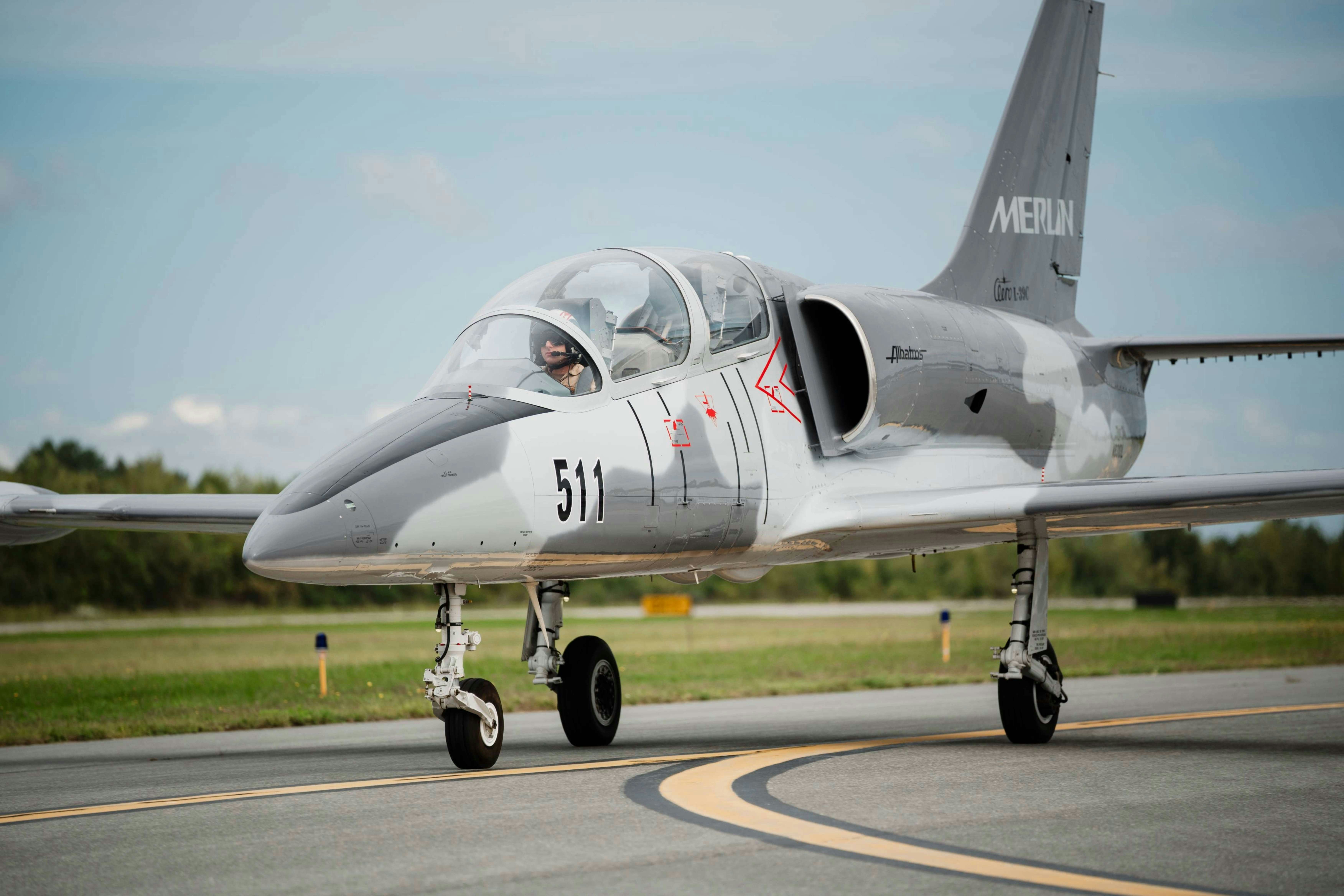
The Widely Operated Military Jet Trainer Offers a High-Performance Jet Environment for Developing and Validating New Autonomy Capabilities.
Key facts:
What: Merlin has added an Aero L-39C Albatros to its test fleet, the company’s first jet.
Role: The L-39 will serve as Merlin's jet testbed, supporting flight testing and continued development of Merlin Pilot for tactical aircraft and missions that require a more expansive flight envelope and dynamic operations.
Why the L-39: A widely operated military jet trainer with forgiving flight characteristics, suited to developing and validating autonomous capabilities in a high-performance jet environment.
Merlin’s test fleet: Cessna 208B Caravan, Beechcraft King Air C90, Aero L-39C Albatros and, through Merlin's C-130J autonomy program with U.S. Special Operations Command (USSOCOM), the Lockheed C-130J.
Designing an aircraft-agnostic autonomy core requires a diverse test fleet. The approach, laid out in more detail in One Brain, Any Aircraft, is a central part of how Merlin Pilot intends to incorporate functionalities that span a wide range of mission sets and be integrated onto a growing number of common air frames.
That test fleet now includes Merlin's first jet, an Aero L-39C Albatros. The L-39 is intended to serve as the company's dedicated jet testbed, supporting flight testing and continued development of Merlin Pilot for tactical aircraft and dynamic military missions.
The L-39 is intended to complement and eventually join our three active Merlin Pilot integration programs:
Utility single (Cessna 208 Caravan): Short sorties for casualty evacuation, urgent cargo, and operations in austere locations.
Twin turboprop (Beechcraft King Air): Long-endurance ISR, maritime missions, and contested logistics across extended ranges.
Tactical airlift (Lockheed C-130J): Long-range, high-payload airlift for operations requiring crew endurance and coordination.
Together, these platforms will allow Merlin to continue maturing its versatile autonomy system across a growing range of common airframes.
What a Jet Adds
Merlin selected the L-39 for its rugged design, forgiving flight characteristics, and status as one of the world's most widely operated military jet trainers, making it well suited for developing and validating autonomous capabilities in a high-performance jet environment. Its common and relatively affordable airframe also makes it an attractive platform for organizations seeking more accessible autonomy solutions. The L-39 also enables Merlin to explore missions that require more tactical operations or involve multiple aircraft working together.
A jet opens up new development possibilities for Merlin Pilot that propeller aircraft do not. Higher approach and cruise speeds compress the time available for every decision, from traffic deconfliction to go-around. The L-39's wing loading and wide operating envelope change the behavior required of flight envelope protection. Developing against those capabilities can help mature the mission autonomy, multi-agent teaming, and envelope protection layers of Merlin Pilot that tactical mission sets depend on.
“Adding the L-39 to our fleet represents the next logical step in Merlin’s autonomy roadmap,” said Matt George, co-founder and CEO of Merlin. “To build a pilot that can fly anything, you need to train it on everything. The L-39 brings a jet into our representative mix of aircraft, giving us another platform to develop a more versatile autonomy core. We designed Merlin Pilot from day one as autonomy for any aircraft, and each platform we integrate on helps us to further mature the system for the missions our commercial and defense customers fly every day.”
Frequently Asked Questions
What is Merlin Pilot?
The Merlin Pilot is a single autonomy core designed to be airframe and mission interoperable, and tailored to a wide range of mission sets.
Why did Merlin add a jet to its fleet?
A jet’s higher speeds and wider operational envelope compress the time available for every decision and change what autonomy has to do. Developing against those capabilities can help mature the layers of Merlin Pilot that tactical mission sets depend on. The L-39 will also provide a platform for Merlin to demonstrate missions that involve multiple aircraft working together.
Why the L-39 specifically?
The L-39 is one of the world's most widely operated military jet trainers, known for its rugged design and forgiving flight characteristics. Its common and relatively affordable airframe also makes it an attractive platform for organizations seeking more accessible autonomy solutions.
Which integration programs is Merlin Pilot active on?
The current programs Merlin is integrating with include the Cessna 208B Caravan, and Beechcraft King Air C90, as well as the Lockheed C-130J through Merlin's C-130J autonomy program with USSOCOM.
Cautionary Statement Regarding Forward-Looking Statements
This post contains forward-looking statements within the meaning of the Private Securities Litigation Reform Act of 1995. All statements other than statements of historical fact should be considered forward-looking statements, including without limitation statements regarding: the anticipated use of the L-39 in flight testing and continued development of Merlin Pilot; our ability to extend Merlin Pilot to tactical aircraft and mission sets, including our ability to use the L-39 to demonstrate missions involving multiple aircraft working together; our ability to develop, mature, and validate Merlin Pilot and integrate onto a growing number of airframes; and the anticipated benefits of our test fleet. These forward-looking statements are based on our current expectations, assumptions, and projections about future events and trends. These forward-looking statements are neither promises nor guarantees, but involve known and unknown risks and uncertainties that could cause actual results to differ materially from those expressed or implied by the forward-looking statements, including without limitation the risks and uncertainties detailed under the section entitled “Risk Factors” of our final prospectus, dated May 13, 2026, filed with the SEC on May 13, 2026, and our subsequently filed Quarterly Reports on Form 10-Q, which are available from the SEC. Except as required by applicable law, we undertake no obligation to update any of these forward-looking statements after the date of this post.
Related


Presence Is Deterrence: Autonomy for the World’s Unwatched Waters
Update
Oct 06, 2026


Merlin Successfully Completes Preliminary Design Review for C-130J Autonomy Program with USSOCOM
Press Release
Mar 05, 2026


Merlin Collaborates with USAF to Advance Autonomous Contingency Management Capabilities
Update
Oct 22, 2025