Autopilot to Autonomy: A Century of Handing Off the Controls
UpdatesJuly 21, 2026


From a hands-off flight over the Seine in 1914 to autonomy today, trust in the machine has always been earned one flight at a time.
Paris, 1914
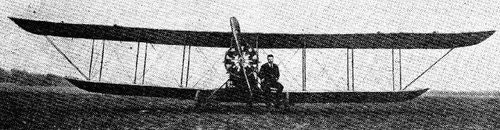
On June 18, 1914, spectators packed the banks of the Seine for a competition whose name reads like a mission statement: The Concours de la Sécurité en Aéroplane (The Airplane Safety Competition). Fifty-seven aircraft entered, showing off self-starters, improved carburetors, and other refinements. Last on the program was a 21-year-old American named Lawrence Sperry.
Passing the judges’ stand, Sperry engaged his gyroscopic stabilizer, took his hands off the controls, and raised both arms over his head. On the next pass, his mechanic, Emil Cachin, climbed out onto the wing. The airplane corrected for the shift in weight and flew on, straight and level. The judge, René Quinton, could only manage, “Mais, c’est inouï !” (But that’s unheard of!).
Two things about that day are worth remembering. The first is what the crowd saw: an airplane that could keep itself stable without constant human input. The second is where it happened, at a safety competition. From its very first public moment, handing off the controls has been about making flight safer.
A century of handoffs
In the hundred years since, aviation has handed the machine one part of the flying task at a time. Each handoff, which we’ve highlighted below, extended what pilots could do, and each was met at first with rational hesitation – the same disciplined caution that has kept aviation safe for a century. But now, nobody thinks of the autopilot as “autonomy;” it’s simply standard equipment. Autonomy, it turns out, is the name we give the handoff we haven’t finished making yet.
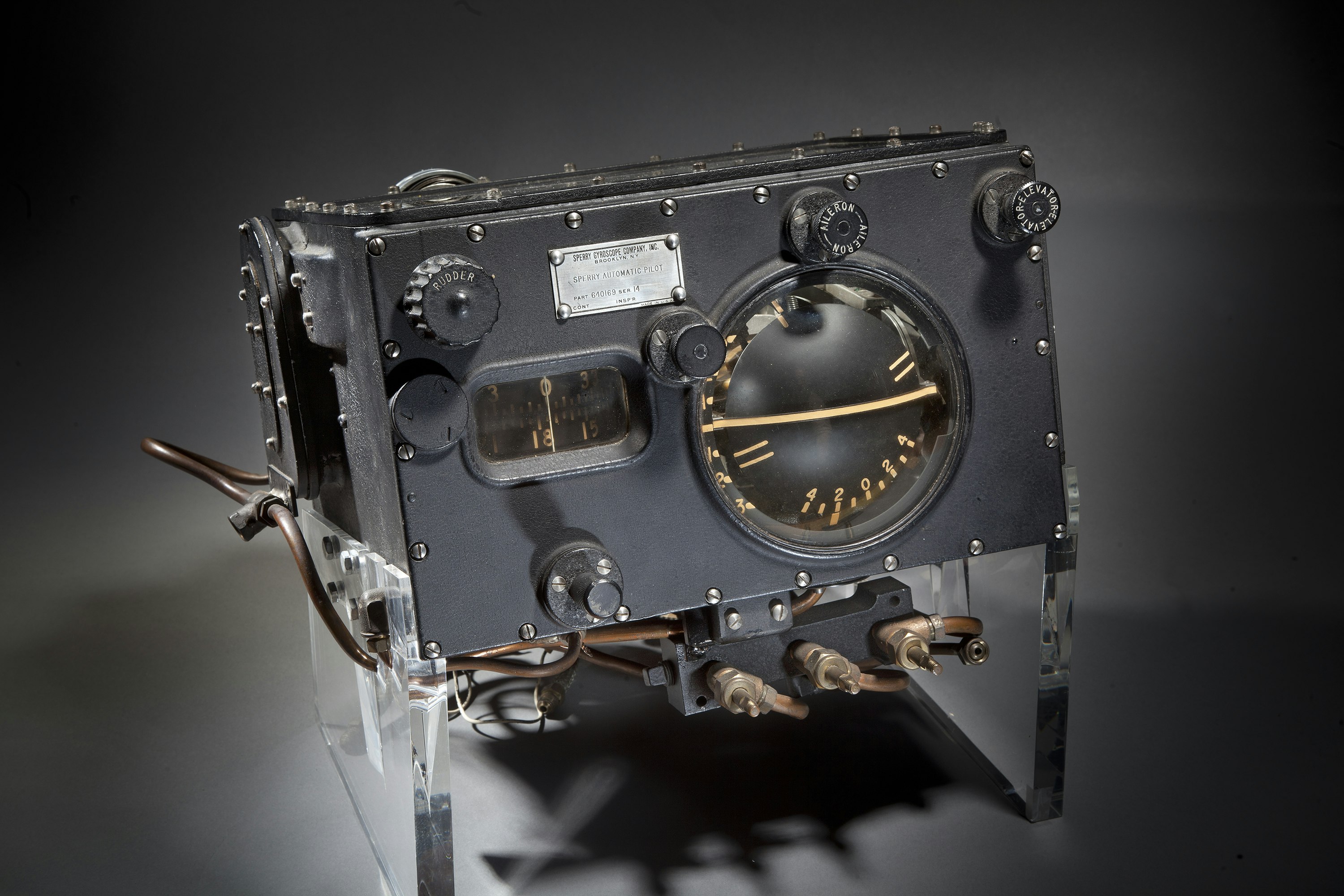
Stability. Early pilots nicknamed the autopilot “George,” and treated it like a crew member because that’s what it was. In 1933, Wiley Post fitted his Lockheed Vega with a prototype Sperry autopilot he called “Mechanical Mike” and flew around the world alone in under eight days, the first solo circumnavigation in history. The autopilot dramatically reduced the physical workload of one of the most demanding solo flights ever attempted, allowing Post to devote more attention to navigation, weather, and managing the aircraft over nearly 16,000 miles.


Guidance. In September 1947, the U.S. Air Force C-54 demonstrated automatic takeoff, navigation, and landing during a transatlantic flight from Newfoundland to England. The New York Times headline announced: “No Hand on Controls From Newfoundland to Oxfordshire — Take-Off, Flight, and Landing Are Fully Automatic.” In the decades that followed, increasingly sophisticated navigation systems, inertial navigation, and eventually flight management systems transformed long-distance flying from labor-intensive navigation into routine precision. The world got dramatically more connected because of it.
Precision Operations. On June 10, 1965, a British European Airways Trident arriving at Heathrow from Paris completed the first automatic landing on a scheduled passenger flight. The system existed because fog kept grounding BEA’s network; within a few years, airliners were landing safely in visibility no human eye could penetrate.
Aircraft Protection. Fly-by-wire arrived in the 1980s and with it, flight envelope protection: a system that understands the aircraft’s limits and helps prevent pilots from inadvertently exceeding the aircraft’s designed flight envelope. When US Airways Flight 1549 lost both engines over New York in 2009, the NTSB noted that the A320’s envelope protection helped protect against an aerodynamic stall. Two exceptional pilots, and alongside them, a guardian that never blinks.
What was never handed off
Look across all four handoffs and one thing stayed constant: judgment. The machine took on the mechanical work: holding altitude, tracking a course, flaring in fog, while the trade-offs stayed human: risk versus mission, fuel versus weather, when to divert, when to press on. As Merlin’s CTO Tim Burns put it in his remarks to the Royal Aeronautical Society, “Aviation has never fundamentally been about machines. It has always been about disciplined decision-making under uncertainty.”
That is why the next handoff is different in degree, not in kind. We believe the frontier is no longer moving a control surface; machines have done that for more than a century. It is inheriting the judgment behind it: Artificial Airmanship, autonomy that learns how experienced pilots actually think, with behavior bounded and assured, and human accountability maintained throughout.
The fifth handoff
Earlier this year, CNN’s Pete Muntean, a pilot, and by his own admission a bit of a control freak, flew with the Merlin Pilot at our flight test facility in Quonset, Rhode Island. He watched it execute an automated takeoff, coordinate with the tower, fly the route, and land. Taking his hands off the yoke didn’t come naturally, and we’d be the first to say it shouldn’t. That hesitation is not an obstacle to aviation’s safety record; it is part of how the record gets built.
What he took away is what matters: he described the flight as part of a real evolution in how aircraft will be flown. That is how every handoff in this story has worked. Trust was never asked for, it was earned. As Larry Colby, Merlin’s Director of Aviation Safety, put it recently, “Autonomy will only succeed if people trust it, and trust is earned through transparency, testing, disciplined engineering, and consistent performance over time.”
The next century
A century ago, a crowd in Paris watched an airplane hold its course without the pilot’s hands on the controls and called it unheard of. Today that same capability is on every airline and no one gives it a second thought when boarding. Every handoff since has followed the same arc, and each one adopted in the service of safer, farther-reaching flight. Aviation’s first century was built around pilots. If history is any guide Merlin Founder and CEO Matt George believes, “the next 100 years will be built around autonomy.”
This post contains forward-looking statements within the meaning of the Private Securities Litigation Reform Act of 1995. Actual results may differ materially from those anticipated, and readers are cautioned not to place undue reliance on such statements, which speak only as of the date of this post and are subject to the risks and uncertainties described under “Risk Factors” in our filings with the Securities and Exchange Commission, including our Prospectus dated May 13, 2026, and our Quarterly Report on Form 10-Q filed May 15, 2026.