The Distance Between Injury and Care
UpdateNovember 16, 2026


Moving Patients Across Distances Depends on Transportation and Information Arriving Together
During Ivy Sting 4 at Fort Carson, Colorado, from January 26 to February 5, 2026, frontline medics linked wearable sensor data to digital 9-line Medical Evacuation (MEDEVAC) requests in simulated casualty scenarios. According to a platoon leader involved in the exercise, wearable sensors and patient-tracking systems allow receiving facilities to monitor en route vital signs, anticipate patient arrival, and prepare resources in advance.
MEDEVAC and Casualty Evacuation (CASEVAC) differ in how they move patients, yet both depend on transportation and information reaching the next point in the journey together.
Casualty Evacuation and the Army Health System
Army doctrine treats casualty evacuation as separate from medical evacuation and not a medical responsibility. It supports the Army Health System by providing a means to augment the finite medical evacuation capacity, according to Army Techniques Publication 4-02.13. Equipment can make a CASEVAC cabin more capable; it cannot replace trained medical personnel or turn a CASEVAC aircraft into a dedicated medical evacuation platform.
Earlier posts in this series examined how operations adapt when work moves far from shore or beyond the reach of familiar ground networks. Patient movement adds another consideration: the information surrounding the patient may need to cross the same distance.
Information That Moves Ahead of the Patient
Digital 9-line requests can be linked to wearable sensor data, so the request and the patient’s condition travel together. Digital documentation also reduces time spent on manual charting. The vehicle moves the patient, and the record moves what is known about them, both through the same system.
Moving patient information also raises questions about access and protection. The Military Health System’s Autonomous Care and Evacuation research portfolio includes advanced communications and cybersecurity, along with clinical decision support, interoperable communications, telehealth and telemonitoring, and enhanced medical documentation.
Not every evacuation will have a continuous connection. Information may need to be collected locally, preserved through an interruption, and transmitted once a link returns. In that setting, what matters most is giving each person in the chain the information their decisions require. Where a continuous connection cannot be assumed, the practical question is how much of the mission can keep working without one.
Bringing the Mission Onboard to Accelerate Access to Care
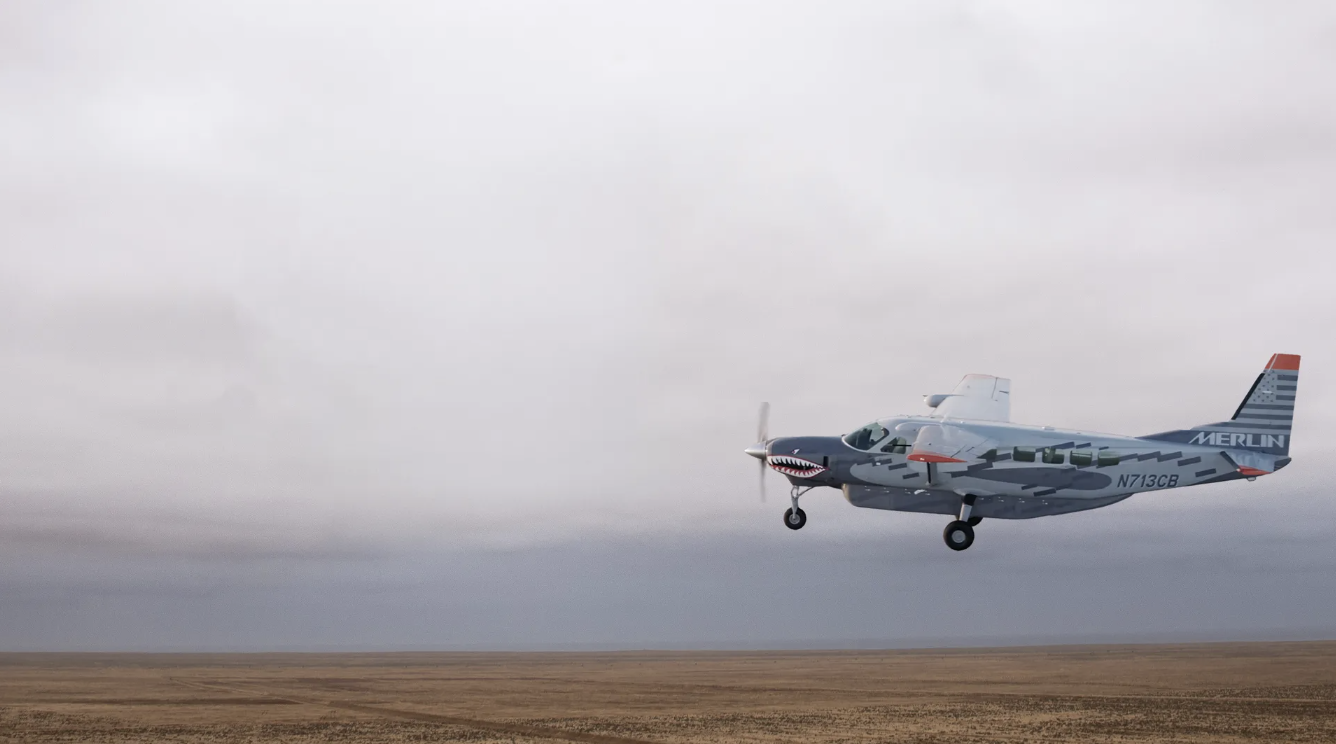
U.S. Africa Command’s (USAFRICOM) Autonomous CASEVAC Industry Technology Challenge is seeking solutions that can accelerate access to care while reducing the number of personnel exposed to risk. Merlin has been awarded a contract for the challenge’s initial phase and plans to demonstrate Merlin Pilot™ autonomously executing a CASEVAC mission using a Cessna 208B Grand Caravan. Planned for early fiscal year 2027 in Morocco, the demonstration will encompass the full mission, from initial tasking and flight planning through autonomous departure and enroute flight to an austere casualty collection site. Following simulated patient loading, the aircraft will conduct its return mission, autonomously completing the flight and landing back at the designated location.
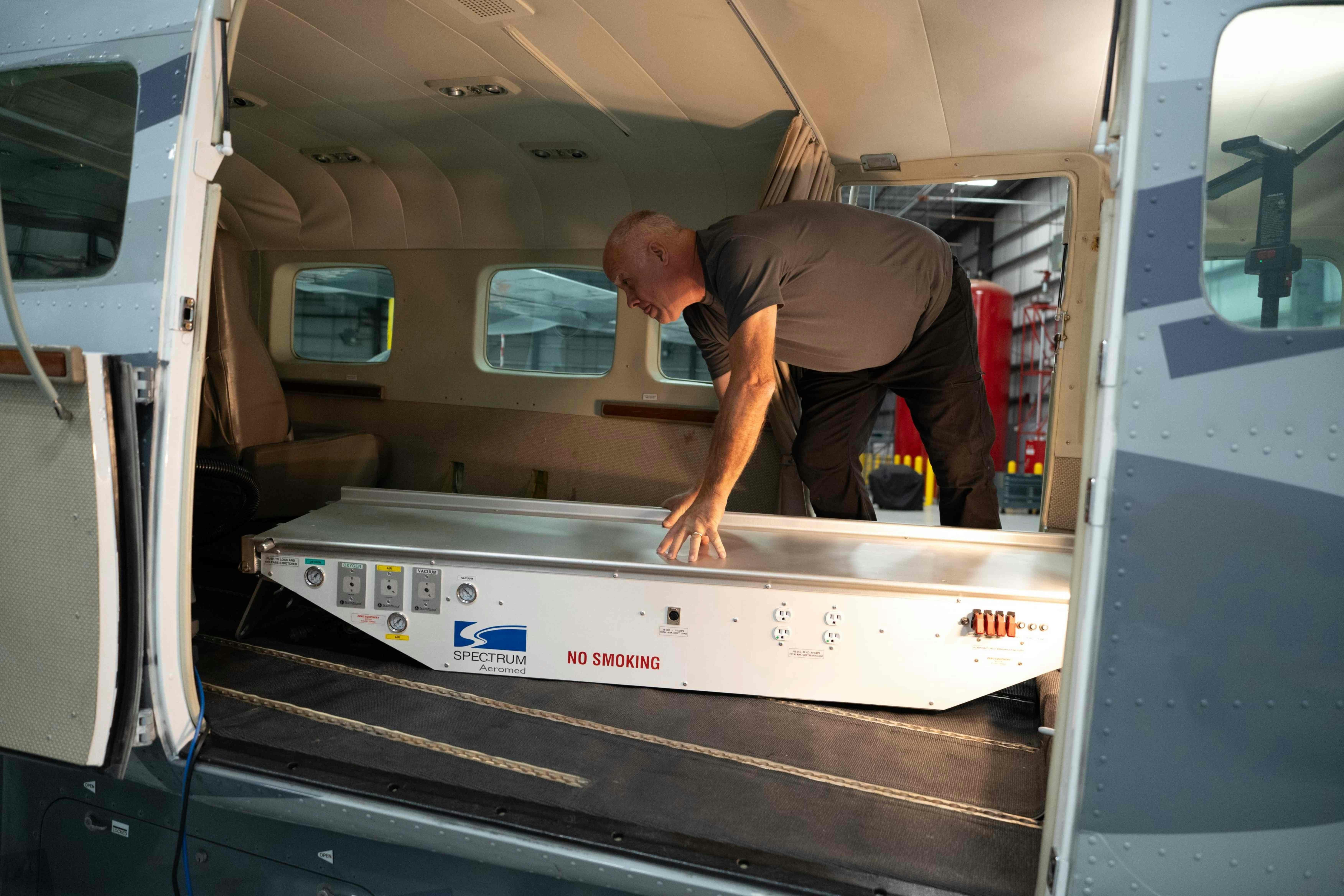
Merlin’s demonstration is planned to show how Merlin Pilot can bring onboard autonomy to aircraft supporting CASEVAC missions, managing flight planning, navigation, contingency response and mission completion without relying on a remote ground station or flight crew. The system is designed to plan the optimal route from an operator’s tasking, replan dynamically around hazards, communicate with air traffic control using natural language processing, and continue safely along its authorized plan if a communications link is lost. The aircraft’s large cargo door and flat-floor cabin will allow ground-level litter loading without rotor wash, winching, or special equipment, and its cabin will be configured with an air ambulance medical module providing oxygen, power, and mounting for patient monitoring equipment.
Patient movement depends on transportation and information arriving together. An aircraft can cover the distance and a digital record can reach the receiving team, but the handoff depends on both still working when the journey gets difficult.
Cautionary Statement Regarding Forward-Looking Statements
This post contains forward-looking statements within the meaning of the Private Securities Litigation Reform Act of 1995. All statements other than statements of historical fact should be considered forward-looking statements, including without limitation statements regarding the timing, location, and scope of the planned USAFRICOM demonstration; the ability of the Merlin Pilot system to execute autonomous CASEVAC missions; Merlin's expectations regarding potential follow-on opportunities, or expansion of its relationship with USAFRICOM or other government customers; the potential extension of Merlin Pilot's autonomous capabilities to additional aircraft platforms; and the potential future applications of Merlin's technology across other combatant commands, allied forces, civil operators, and disaster response or medical transport missions. These forward-looking statements are based on our current expectations, assumptions, and projections about future events and trends. These forward-looking statements are neither promises nor guarantees, but involve known and unknown risks and uncertainties that could cause actual results to differ materially from those expressed or implied by the forward-looking statements, including without limitation the risks and uncertainties detailed under the section entitled “Risk Factors”; of our final prospectus, dated May 13, 2026, filed with the SEC on May 13, 2026, and in our Quarterly Reports on Form 10-Q filed with the SEC. Except as required by applicable law, we undertake no obligation to update any of these forward-looking statements after the date of this post.
Related


Merlin Awarded $8.9 Million Task Order To Advance USSOCOM C-130J Autonomy Program from Design Into Integration
Press Release
Nov 10, 2026



Merlin Further Expands Executive Team Appointing Mark Brunner as Chief Revenue Officer
Press Release
Apr 13, 2026


Merlin’s $500,000 U.S. Africa Command Contract and the Case for Autonomous Casualty Evacuation
Investor
Nov 11, 2026